Buy allphone.eu ?
We are moving the project
allphone.eu .
Are you interested in purchasing the domain
allphone.eu ?
domain@kv-gmbh.de · 0541-91531010
Buy allphone.eu ?
Which FOS is meant: Technology or Economics?
The FOS (Field of Study) that is meant can vary depending on the context. If the question is asking about a specific academic program or course, then the FOS would be Technology or Economics, depending on the focus of the program. If the question is asking about a specific career or industry, then the FOS would also depend on the specific field within Technology or Economics. It's important to clarify the context in order to determine which FOS is being referred to. **
What is the difference between Quantitative Economics and Economics?
Quantitative economics is a subfield of economics that focuses on using mathematical and statistical methods to analyze economic phenomena, while economics is a broader field that encompasses the study of how societies allocate scarce resources to satisfy unlimited wants. Quantitative economics emphasizes the use of data and mathematical models to understand and predict economic behavior, while economics encompasses a wider range of topics, including microeconomics, macroeconomics, international economics, and development economics. In essence, quantitative economics is a more specialized and technical approach within the broader field of economics. **

Similar search terms for Economics
Top-Angebote
Products related to Economics:
-
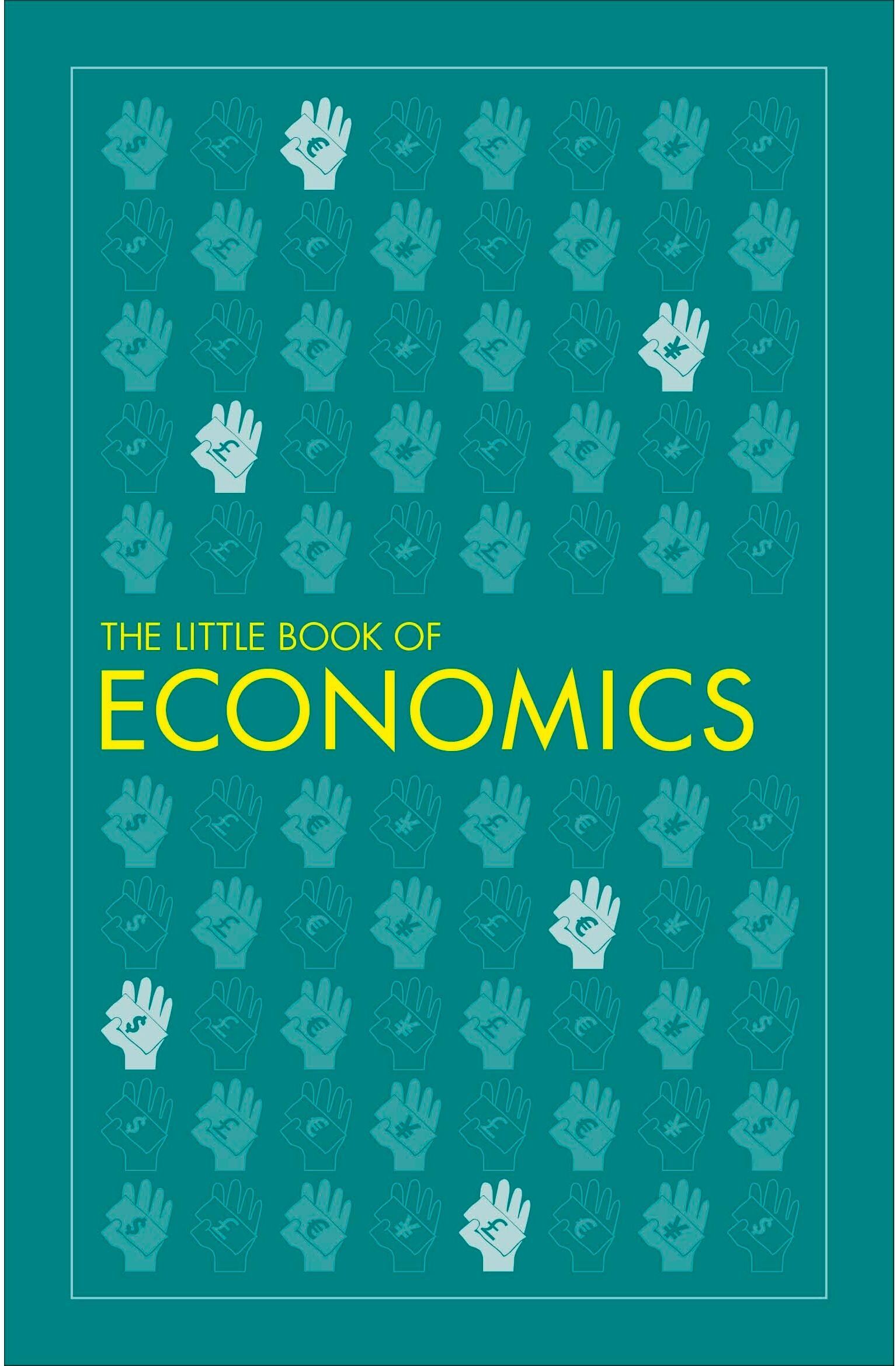
The Little Book of Economics (DK Big Ideas Series)This book is the perfect introduction to the subject of economics and economic ideas through history. From the earliest forms of currency to the Industrial Revolution, and from the birth of the stock market to free-market capitalism and globalized trade, The Little Book of Economics brings economic theory and the work of key economists to life. Journeying through centuries of economic thought, it is the perfect pocket-sized guide to the subject. Packed with infographics and flowcharts that explain complex concepts clearly and simply, The Little Book of Economics offers you a combination of clear text and hard-working infographics in a portable format that is perfect for reading on the go.5,99 £*Shipping: 2,99 £Secure redirect to the provider
-
Misbehaving: The Making of Behavioural Economics, Richard H. ThalerDescription. RICHARD H. THALER: WINNER OF THE 2017 NOBEL PRIZE IN ECONOMICS. Shortlisted for the Financial Times and McKinsey Business Book of the Year Award. ECONOMIST, FINANCIAL TIMES and EVENING STANDARD books of the year. From the renowned and entertaining behavioural economist and co-author of the seminal work Nudge, Misbehaving is an irreverent and enlightening look into human foibles. Traditional economics assumes that rational forces shape everything. Behavioural economics knows better. Richard Thaler has spent his career studying the notion that humans are central to the economy - and that we're error-prone individuals, not Spock-like automatons. Now behavioural economics is hugely influential, changing the way we think not just about money, but about ourselves, our world and all kinds of everyday decisions.. Title. Misbehaving: The Making of Behavioural Economics, Richard H. Thaler. Delivery. Content. Reviews9,99 £*Shipping: 2,99 £Secure redirect to the provider
-
Left Behind: A New Economics for Neglected Places by Paul Collier HardcoverDescription. Condition: Brand New. Format : Hardcover. The world-renowned economist offers a ground-breaking new vision for inclusive prosperity. Left behind places can be found in prosperous countries―from South Yorkshire, integral to the industrial revolution and now England’s poorest county, to Barranquilla, once Colombia’s portal to the Caribbean and now struggling. More alarmingly, the poorest countries in the world are diverging further from the rest of humanity than they were at the start of this century. Why have these places fallen behind? And what can we do about it?. World-renowned development economist Paul Collier has spent his life working in neglected communities. In this book he offers his candid diagnosis of why some regions and countries are failing, and a new vision for how they can catch up. Collier lays the blame for widening inequality on stale economic orthodoxies that prioritize market forces to revive left behind regions, and on the arrogant, hands-off and one-size fits all approach of centralized bureaucracies like the UK Treasury. As a result, Collier argues, the UK has become the most unequal and unfair society in the western world.. Yet the core message of Left Behind is hopeful: bringing together encouraging case studies of recovery from around the world, Collier shows how renewal is achievable through a combination of collective learning, moral leadership and local agency. With keen insight, he draws lessons from such seemingly disparate fields as behavioural psychology, evolutionary biology and moral philosophy to share a bold, galvanizing vision for a more inclusive, prosperous world.. Title. Death Note Box Set: Vols 1-13: Volumes 1 - 13. Delivery. Content. Reviews18,67 £*Shipping: 2,99 £Secure redirect to the provider
-
Ha-Joon Chang Collection 3 Books Set Economics, Bad Samaritans,23 Things TheyDescription. Condition: BRAND NEW. Format: Paperback. Bad Samaritans: The Guilty Secrets of Rich Nations and the Threat to Global Prosperity .... It's rare that a book appears with a fresh perspective on world affairs, but renowned economist Ha-Joon Chang has some startlingly original things to say about the future of globalization. In theory, he argues, the world's wealthiest countries and supra-national institutions like the IMF, World Bank and WTO want to see all nations developing into modern industrial societies. In practice, though, those at the top are 'kicking away the ladder' to wealth that they themselves climbed.... 23 Things They Don't Tell You About Capitalism. In this revelatory book, Ha-Joon Chang destroys the biggest myths of our times and shows us an alternative view of the world, including:. There's no such thing as a 'free' market. Globalization isn't making the world richer. We don't live in a digital world - the washing machine has changed lives more than the internet.. Economics: The User's Guide: A Pelican Introduction (Pelican Books) .. Ha-Joon Chang teaches economics at Cambridge University, and writes a column for the Guardian. The Observer called his book 23 Things They Don't Tell You About Capitalism, which was a no.1 bestseller, 'a witty and timely debunking of some of the biggest myths surrounding the global economy.' He won the Wassily Leontief Prize for advancing the frontiers of economic thought, and is a vocal critic of the failures of our current economic system.. Title. Ha-Joon Chang Collection 3 Books Set Economics, Bad Samaritans,23 Things They. Delivery. Content. Reviews28,99 £*Shipping: 2,99 £Secure redirect to the provider


-
Which subject is taught in 10th grade: Information Technology or Economics?
In 10th grade, students are typically taught Economics. This subject covers topics such as microeconomics, macroeconomics, and economic systems. Information Technology may also be offered as a separate course, but it is less commonly taught in 10th grade compared to Economics. **
-
'Economics or Geography?'
Both economics and geography are important fields of study that offer unique perspectives on the world. Economics focuses on the production, distribution, and consumption of goods and services, while geography examines the physical features of the Earth and how they impact human activities. Ultimately, the choice between economics and geography depends on individual interests and career goals. Those interested in understanding global markets and financial systems may prefer economics, while those interested in environmental issues and spatial relationships may lean towards geography. Both fields offer valuable insights and can complement each other in understanding complex societal issues. **
-
Why study economics?
Studying economics is important because it helps us understand how individuals, businesses, and governments make decisions about allocating resources. It provides insights into how markets function, how policies impact the economy, and how to address issues like poverty, inequality, and unemployment. Economics also equips us with analytical and critical thinking skills that are valuable in a wide range of careers, from finance and business to public policy and international relations. Ultimately, studying economics can help us make informed decisions, both in our personal lives and in shaping public policies for the betterment of society. **
-
What is economics?
Economics is the study of how individuals, businesses, and governments allocate resources to satisfy their needs and wants. It examines how goods and services are produced, distributed, and consumed in a society. Economics also analyzes the behavior of markets, the impact of government policies, and the factors that influence economic growth and development. Overall, economics provides a framework for understanding and making decisions about the allocation of scarce resources in a world of unlimited wants. **


Do you have to be smart to understand politics and economics?
While intelligence can certainly be helpful in understanding politics and economics, it is not the only factor at play. A basic level of understanding can be achieved through education, research, and critical thinking skills. Additionally, personal experiences and perspectives can also shape one's understanding of these complex subjects. Ultimately, a willingness to learn and engage with the topics is more important than innate intelligence. **
Should I study economics, political economics, business administration or law?
The answer to this question depends on your interests and career goals. If you are interested in understanding how economies function and the impact of policies on society, then studying economics or political economics would be a good choice. If you are more interested in the practical aspects of running a business, then business administration would be a better fit. If you are passionate about justice and the legal system, then studying law would be the most suitable option. Consider your strengths, interests, and long-term career aspirations to make the best decision for yourself. **
Top-Angebote
Products related to Economics:
-
The Little Book of Economics (DK Big Ideas Series)This book is the perfect introduction to the subject of economics and economic ideas through history. From the earliest forms of currency to the Industrial Revolution, and from the birth of the stock market to free-market capitalism and globalized trade, The Little Book of Economics brings economic theory and the work of key economists to life. Journeying through centuries of economic thought, it is the perfect pocket-sized guide to the subject. Packed with infographics and flowcharts that explain complex concepts clearly and simply, The Little Book of Economics offers you a combination of clear text and hard-working infographics in a portable format that is perfect for reading on the go.5,99 £*Shipping: 2,99 £Secure redirect to the provider
-
Misbehaving: The Making of Behavioural Economics, Richard H. ThalerDescription. RICHARD H. THALER: WINNER OF THE 2017 NOBEL PRIZE IN ECONOMICS. Shortlisted for the Financial Times and McKinsey Business Book of the Year Award. ECONOMIST, FINANCIAL TIMES and EVENING STANDARD books of the year. From the renowned and entertaining behavioural economist and co-author of the seminal work Nudge, Misbehaving is an irreverent and enlightening look into human foibles. Traditional economics assumes that rational forces shape everything. Behavioural economics knows better. Richard Thaler has spent his career studying the notion that humans are central to the economy - and that we're error-prone individuals, not Spock-like automatons. Now behavioural economics is hugely influential, changing the way we think not just about money, but about ourselves, our world and all kinds of everyday decisions.. Title. Misbehaving: The Making of Behavioural Economics, Richard H. Thaler. Delivery. Content. Reviews9,99 £*Shipping: 2,99 £Secure redirect to the provider
-
Which FOS is meant: Technology or Economics?
The FOS (Field of Study) that is meant can vary depending on the context. If the question is asking about a specific academic program or course, then the FOS would be Technology or Economics, depending on the focus of the program. If the question is asking about a specific career or industry, then the FOS would also depend on the specific field within Technology or Economics. It's important to clarify the context in order to determine which FOS is being referred to. **
-
What is the difference between Quantitative Economics and Economics?
Quantitative economics is a subfield of economics that focuses on using mathematical and statistical methods to analyze economic phenomena, while economics is a broader field that encompasses the study of how societies allocate scarce resources to satisfy unlimited wants. Quantitative economics emphasizes the use of data and mathematical models to understand and predict economic behavior, while economics encompasses a wider range of topics, including microeconomics, macroeconomics, international economics, and development economics. In essence, quantitative economics is a more specialized and technical approach within the broader field of economics. **
-
Which subject is taught in 10th grade: Information Technology or Economics?
In 10th grade, students are typically taught Economics. This subject covers topics such as microeconomics, macroeconomics, and economic systems. Information Technology may also be offered as a separate course, but it is less commonly taught in 10th grade compared to Economics. **
-
'Economics or Geography?'
Both economics and geography are important fields of study that offer unique perspectives on the world. Economics focuses on the production, distribution, and consumption of goods and services, while geography examines the physical features of the Earth and how they impact human activities. Ultimately, the choice between economics and geography depends on individual interests and career goals. Those interested in understanding global markets and financial systems may prefer economics, while those interested in environmental issues and spatial relationships may lean towards geography. Both fields offer valuable insights and can complement each other in understanding complex societal issues. **
Similar search terms for Economics
-
Left Behind: A New Economics for Neglected Places by Paul Collier HardcoverDescription. Condition: Brand New. Format : Hardcover. The world-renowned economist offers a ground-breaking new vision for inclusive prosperity. Left behind places can be found in prosperous countries―from South Yorkshire, integral to the industrial revolution and now England’s poorest county, to Barranquilla, once Colombia’s portal to the Caribbean and now struggling. More alarmingly, the poorest countries in the world are diverging further from the rest of humanity than they were at the start of this century. Why have these places fallen behind? And what can we do about it?. World-renowned development economist Paul Collier has spent his life working in neglected communities. In this book he offers his candid diagnosis of why some regions and countries are failing, and a new vision for how they can catch up. Collier lays the blame for widening inequality on stale economic orthodoxies that prioritize market forces to revive left behind regions, and on the arrogant, hands-off and one-size fits all approach of centralized bureaucracies like the UK Treasury. As a result, Collier argues, the UK has become the most unequal and unfair society in the western world.. Yet the core message of Left Behind is hopeful: bringing together encouraging case studies of recovery from around the world, Collier shows how renewal is achievable through a combination of collective learning, moral leadership and local agency. With keen insight, he draws lessons from such seemingly disparate fields as behavioural psychology, evolutionary biology and moral philosophy to share a bold, galvanizing vision for a more inclusive, prosperous world.. Title. Death Note Box Set: Vols 1-13: Volumes 1 - 13. Delivery. Content. Reviews18,67 £*Shipping: 2,99 £Secure redirect to the provider
-
Ha-Joon Chang Collection 3 Books Set Economics, Bad Samaritans,23 Things TheyDescription. Condition: BRAND NEW. Format: Paperback. Bad Samaritans: The Guilty Secrets of Rich Nations and the Threat to Global Prosperity .... It's rare that a book appears with a fresh perspective on world affairs, but renowned economist Ha-Joon Chang has some startlingly original things to say about the future of globalization. In theory, he argues, the world's wealthiest countries and supra-national institutions like the IMF, World Bank and WTO want to see all nations developing into modern industrial societies. In practice, though, those at the top are 'kicking away the ladder' to wealth that they themselves climbed.... 23 Things They Don't Tell You About Capitalism. In this revelatory book, Ha-Joon Chang destroys the biggest myths of our times and shows us an alternative view of the world, including:. There's no such thing as a 'free' market. Globalization isn't making the world richer. We don't live in a digital world - the washing machine has changed lives more than the internet.. Economics: The User's Guide: A Pelican Introduction (Pelican Books) .. Ha-Joon Chang teaches economics at Cambridge University, and writes a column for the Guardian. The Observer called his book 23 Things They Don't Tell You About Capitalism, which was a no.1 bestseller, 'a witty and timely debunking of some of the biggest myths surrounding the global economy.' He won the Wassily Leontief Prize for advancing the frontiers of economic thought, and is a vocal critic of the failures of our current economic system.. Title. Ha-Joon Chang Collection 3 Books Set Economics, Bad Samaritans,23 Things They. Delivery. Content. Reviews28,99 £*Shipping: 2,99 £Secure redirect to the provider
-
Behavioural Economics Saved My Dog: Life Advice For The Imperfect Human, Dan ArielyDescription. Internationally bestselling author Dan Ariely brings his unique perspective to bear on a maelstrom of life’s problems – from how to deal with a Christmas card list that’s fast becoming unmanageable to whether or not you should have children.. Ariely changed the way we view ourselves, how we think and how we act, with his book Predictably Irrational. In his immensely popular Wall Street Journal advice column, where readers “Ask Ariely” for his help with various dilemmas, he provides a logical view on the seemingly illogical, shedding light on the most curious minutiae of human behaviour.. With a helping hand from legendary New Yorker cartoonist William Haefeli, Ariely’s new book will make you laugh at the ridiculous aspects of our daily existence just as you gain a new perspective on how to handle the inevitable challenges that life brings us all.. Title. Behavioural Economics Saved My Dog: Life Advice For The Imperfect Human, Dan Ariely. Delivery. Content. Reviews7,32 £*Shipping: 2,99 £Secure redirect to the provider
-
Rachel Poulton The Little Book of Philosophy, Sociology, Economics & Psychology 4 Books Collection SetDescription. The Little Book of Philosophy:. Philosophy is a quest for wisdom and knowledge; philosophia in Ancient Greek literally means “love of wisdom”. The aim of philosophy is to ask and explore life’s big questions to help us work out what we can know and how we can live a good life. Today, in a world of fake news, embarking on a quest for truth couldn’t be more important.. The Little Book of Sociology:. From the smallest everyday interaction to the impact of vast systemic change, societies are brimming with fascinating phenomena we all want to understand more clearly.There's never been a more important moment to grasp what's going on around us, and this pocket-sized guide offers an engaging introduction to the key sociological concepts.. The Little Book of Economics:. This Book will bring you up to speed on the basics of micro- and macroeconomics and demystify the world of taxes, trade, investments and finance, in simple English and with easy-to-follow examples.By the end of this crash course, you will have a grasp on all the essential terms, concepts and theories you need to know to understand modern-day.. The Little Book of Psychology:. If you want to know your Freud from your Jung and your Milgram from your Maslow, strap in for this whirlwind tour of the highlights of psychology. Including accessible primers on: - The early thinkers who contributed to psychological ideas and the birth of modern psychology- Famous (and often controversial) experiments and their repercussions.. Title. The Little Book of Philosophy, Sociology, Economics & Psychology 4 Books Collection Set. Delivery. Content. Reviews99,99 £*Shipping: 0,00 £Secure redirect to the provider
-
Why study economics?
Studying economics is important because it helps us understand how individuals, businesses, and governments make decisions about allocating resources. It provides insights into how markets function, how policies impact the economy, and how to address issues like poverty, inequality, and unemployment. Economics also equips us with analytical and critical thinking skills that are valuable in a wide range of careers, from finance and business to public policy and international relations. Ultimately, studying economics can help us make informed decisions, both in our personal lives and in shaping public policies for the betterment of society. **
-
What is economics?
Economics is the study of how individuals, businesses, and governments allocate resources to satisfy their needs and wants. It examines how goods and services are produced, distributed, and consumed in a society. Economics also analyzes the behavior of markets, the impact of government policies, and the factors that influence economic growth and development. Overall, economics provides a framework for understanding and making decisions about the allocation of scarce resources in a world of unlimited wants. **
-
Do you have to be smart to understand politics and economics?
While intelligence can certainly be helpful in understanding politics and economics, it is not the only factor at play. A basic level of understanding can be achieved through education, research, and critical thinking skills. Additionally, personal experiences and perspectives can also shape one's understanding of these complex subjects. Ultimately, a willingness to learn and engage with the topics is more important than innate intelligence. **
-
Should I study economics, political economics, business administration or law?
The answer to this question depends on your interests and career goals. If you are interested in understanding how economies function and the impact of policies on society, then studying economics or political economics would be a good choice. If you are more interested in the practical aspects of running a business, then business administration would be a better fit. If you are passionate about justice and the legal system, then studying law would be the most suitable option. Consider your strengths, interests, and long-term career aspirations to make the best decision for yourself. **
* All prices are inclusive of VAT and, if applicable, plus shipping costs. The offer information is based on the details provided by the respective shop and is updated through automated processes. Real-time updates do not occur, so deviations can occur in individual cases. ** Note: Parts of this content were created by AI.